
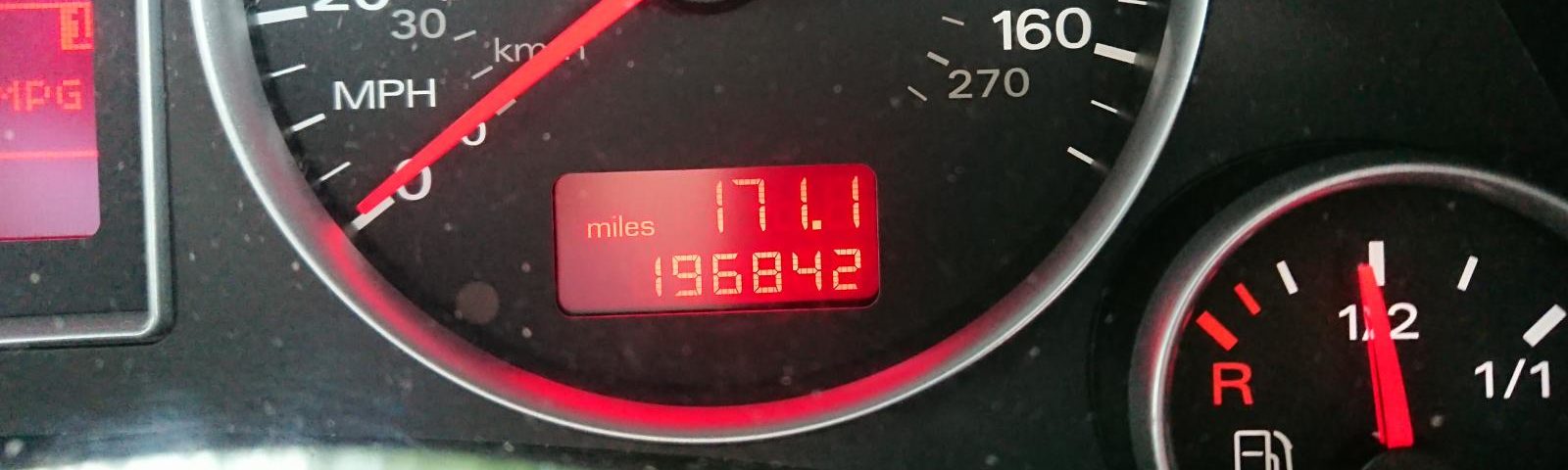
Anyone who cares about their car wants to know that it is running efficiently and performing as it should. This can’t last forever though. Time will eventually take it’s toll: the engine parts will wear down the turbo will lose efficiency, fuel lines will clog up, air intakes become choked and even electric parts can deteriorate over time, all causing losses of precious horse power as well as fuel economy and emissions. Figures such as 1 BHP loss per year have been claimed. It’s now August 2019; my Audi A4 was first registered in Sep 2006 and has done almost 200,000 miles. Surely by now it will have experienced a considerable drop compared to when it was new. How much has it lost and what can I do about it?
Spur of the moment performance test
I was stopped at the stop line at a red light at on a dual carriageway. There was no one else around and I had a straight road ahead of me. It was a spur of the moment decision but I decided to see how long it would take this ageing machine to get to 60 mpg. I have a dongle permanently attached to my car’s diagnostic port which communicates with the Torque Pro app running on my Android powered head unit. This was already running so I was ready to find out.
I quickly switched Torque to the 0-60 mph timer and waited for the lights to turn green. When the lights changed I stomped on the accelerator and dumped the clutch. The revs dropped as I waited for the turbo to kick in. It wasn’t a great start but I kept going. Changing from first to second comes after reaching 30 mph. I made a rapid change, the car stopped accelerating and the traction control light started flashing wildly. I’d overdone the gear change but second gear would get me to 60 mph. Once there I took a glance down at the timer: a slightly disappointing 8.5 seconds.
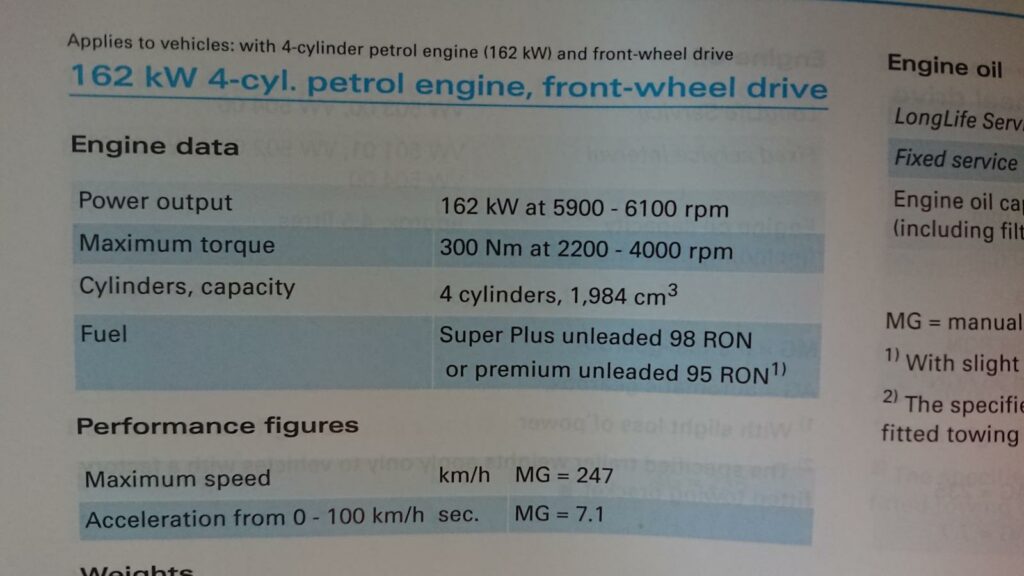
The manual states that this car should be able to achieve 0-100 kph (0-62mph) in 7.1 seconds and in fact I did achieve this last time I tested which was back in 2014 with about 130,000 miles on the clock. I don’t always use 98 RON fuel but I did at my last refuel and it was currently about half full. There was no extra weight in the car and the road conditions were good. Had my car dropped 1.4 seconds because of age and mileage? I felt that with a better start and smoother gear change I could improve on this time.
Lets give that another go
The next day I set off for a drive to find a good spot to try again. There’s never a red light when you need one so headed out into the country. I required a long straight road – corners are not great for time trials. It’s also important to be able to see that no one is in front or approaching from behind. The first long straight I arrived at happened to be downhill. I thought it would be amusing to try it downhill to get a really good time just to cheer me up a bit.
I switched off the traction control this time – I’d need to ensure my clutch control was spot on. Once again the start was not the best and I did get a fair bit of wheel spin during the gear change, but it was downhill so should be great, right? Nope: 7.9 seconds.
I drove on and thought a bit more about how I was going to control the car for my next attempt – and the possibility that my best efforts would not be enough if the car had in fact lost a significant amount of performance. I found another long straight flat empty road a few miles along. A good glance in the rear view mirror confirmed that no one was coming up behind me and brought the car to a complete stop and confirmed the timer was ‘ready’.
I built up a bit of revs before steadily letting the clutch out. Too quickly would make the wheels spin or the revs drop and too slowly would waste time. I did get a little bit of tyre screech but I was pretty happy. I didn’t have long to dwell on that as the gear change was approaching. Always tricky in a front wheel car but I managed to contain the revs just enough to prevent losing traction. I wasn’t going to get much better but what would it mean if I didn’t get the numbers I was hoping for? After reaching 60 I let my foot off the pedal and tentatively looked at the result: 6.9 seconds!
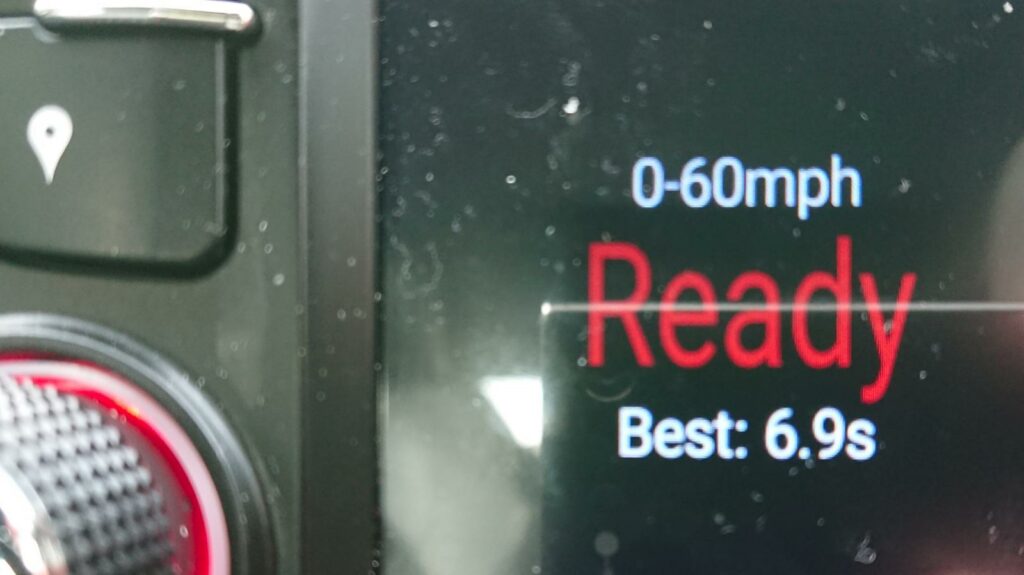
She’s still got it!
A great result: somehow I had beaten the manual’s expected time as well as all my previous attempts. The important thing is that is compared favourably with the benchmark I had set 5 years ago and I seemed the car still had the amount of power I would hope for. To do the test properly I would really have to do the average 2 timed runs in opposite directions to compensate for wind and road gradient, but in this case I was just confirming the engine power was still available. I was happy that wind and gradient would not have had a significant difference in this case.
Thoughts on the tests
The 0-60 test is sometimes seen as a useful way to compare cars but really it’s just number in the same way as bhp and torque. It doesn’t have a real world driving application. That said, it is useful to be able to compare the results of any test over time, especially if you are planning performance upgrades. I am planning to take the car to a rolling road soon to take some measurements. Due to the testing methodology this may not give the same results as the figures in the manual but again it will provide a benchmark for future comparison.
What if performance had dropped?
I watched an interesting video produced by Fifth Gear which shows some steps that can be taken to improve the performance of an older engine, in this case a 1995 VW Corrado. The tweaks performed include using an engine additive, new air filter, oil change, new filter and replacing the spark plugs and HT leads. After each tweak the performance is re-measured on a rolling road showing that some improvements could be made. Ultimately the best approach is keeping the car well maintained and completing all servicing when it is due. If you want to keep it running sweet then just look after it.